
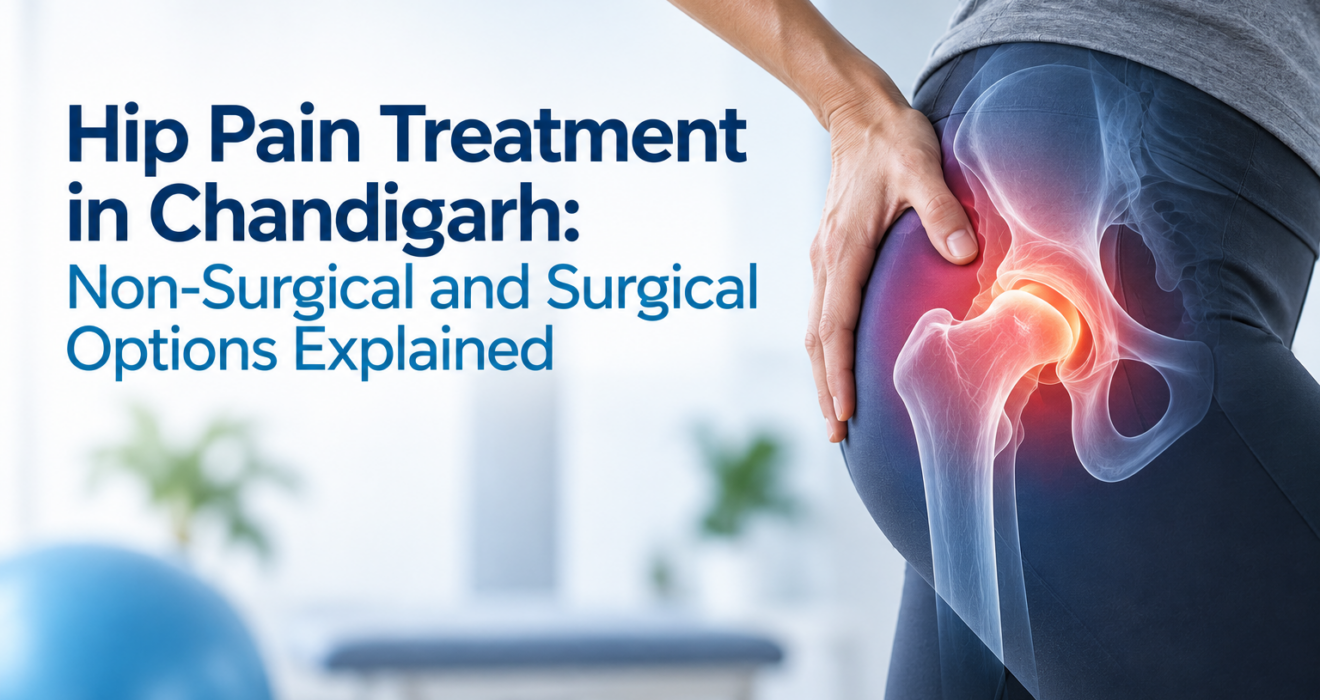
Hip Pain Treatment in Chandigarh: Non-Surgical and Surgical Options Explained
Hip pain affects individuals of different ages and makes simple tasks like walking, climbing stairs, sitting, or sleeping more painful and bothersome. Sometimes mild pain tends to improve with rest and some care, but if symptoms do not improve or get worse, it may be due to joint or other musculoskeletal problems Choosing the Best Hip Pain Treatment in Chandigarh depends on the cause of the pain. Based on symptoms, age, activity level, and overall health, an orthopaedic surgeon might suggest non-surgical treatment, minimally invasive surgeries, or a hip replacement.
Common Reasons For Hip Pain
There are many reasons for hip pain. Some of these reasons include osteoarthritis, rheumatoid arthritis, bursitis, tendon issues, sports injuries, torn cartilage, hip fractures, and avascular necrosis.
One of the more common reasons for chronic hip pain is degeneration from age-related wear and tear. Cartilage loss may result in bones rubbing together causing pain, stiffness, and very limited range of motion.
First, a medical professional needs to examine the patient to see what could be causing the symptoms. The hip joint may not actually be the source. The symptoms may be caused by something associated with the hip, the muscle, or the lower back.
Diagnosis and Treatment
Before a treatment plan is made, the orthopedic surgeon will evaluate the patient’s symptoms and do a physical examination. The surgeon may also order X-rays or other tests because they want to know the cause and the extent of the problem.
Treating pain is not the right basis for making a diagnosis. Treatment is only proper when a diagnosis has been made.
Non-Surgical Treatment Options for Hip Pain
There are numerous non-surgical options for the management of hip pain that are dependent upon the underlying condition.
Physiotherapy
Initial management for hip pain may include a prescribed program which may improve the function of muscle, joints, balance, and flexibility. Exercises are specific to the patient, and are prescribed by a Physiotherapist based on the patient’s potential and the physical and functional limitations.
Physiotherapy aims to improve joint function by improving movement of the joint, as well as to reduce stress on joints by addressing movement imbalances.
Medication
Interim management of hip pain may include the use of medications to manage pain and joint inflammation. These medications are only prescribed on a temporary basis, and should not be used unless they are under the direction of a qualified prescriber. This is particularly important when a patient has other co-morbidities, or is using other medications.
Lifestyle Change
Improvements in daily activities may include a change in lifestyle and a reduction in weight, to help reduce stress on the hip joints. Low impact exercise and activitites may help to alleviate symptoms of hip pain and discomfort.
Injections
Injections may be an option for some hip pain conditions. The use of injections depends on the patient’s specific symptoms, the diagnosis, and the patient’s goals of care.
Surgery
Surgery is an option when hip pain is significant and interferes with the patient’s quality of life, even with other non-surgical management options.
The decision to have surgery is not based solely on advanced age. The severity of joint damage, pain, functional ability, general health, the response to other treatments, and other co existing conditions are considered.
Hip Replacement Surgery
Hip replacement surgery may be offered to a patient who has significant joint damage, and for whom other non-surgical treatments have been ineffective. The surgical replacement of the hip joint involves a total hip replacement with the use of implants.
The goal is to eliminate pain and enhance the ability to perform daily routines.
For patients in Chandigarch considering hip replacements, meeting with a renowned Hip Joint Replacement Doctor in chandigarh is strongly advisable to determine if surgery is the best course of action and to review the available options.
The surgeon can inform the patient about the available types of implants, the surgical approaches, the anticipated recovery and rehabilitation time, and possible surgical complications.
Minimally Invasive, Technology-Focused Approaches
Newer surgical approaches to hip replacement can include minimally invasive techniques or the use of technology to aid the planning of surgery and placement of the hip implant. Based on the patient’s specific case and the surgical facility, some hospitals offer these technologies.
Not all patients require advanced or technology-focused surgical procedures. In the end, the technique of surgery is based on the individual case, the diagnosis, the surgeon’s preference, and other clinical factors.
Recovery after Hip Surgery
After hip replacement surgery, the recovery process is gradual. How soon after surgery the patient is able to perform assisted movements is based on the patient and the surgeon’s determination.
Physical Therapy
A structured PT program is needed to restore pre-recovery strength, balance, flexibility, and the ability to walk again.
Recovery instructions related to wound care, medications, rest, and new levels of activity need to be followed. The length of the recovery process can be very different for individual patients.
Choosing the Right Surgeon
When a patient is looking for a Hip Pain Treatment in Chandigarh, it is recommended to take the entire recovery process and the surgeon’s treatment plan into consideration rather than solely looking at the transportation time and location for the surgery.
- Specialist qualifications and experience
- Experience treating your specific hip condition
- Availability of diagnostic facilities
- Surgical and hospital capacities
- Rehabilitation and physiotherapy
- Clarity in explaining different options for treatment
- Explanation regarding the treatment’s benefits and risks
- Tailoring treatment to your needs
A good consultation should address the reasons behind a recommending a specific treatment and available alternatives.
When Should You See a Doctor?
You should consult an orthopaedic specialist when hip pain returns and/or is persistent, when you have pain in the hip when walking, when your normal daily activities become restricted, and in the presence of stiffness, as well as limited range of motion, in the hip.
Severe hip pain after an injury and the inability to put any weight on the hip as well as other serious symptoms warrant immediate medical care.
Conclusion
Hip pain has a variety of causes meaning that treatment depends on an accurate diagnosis. Depending on the cause, Hip Pain Treatment in Chandigarh may consist of physiotherapy, medications, injections, activity modification, and surgery.
For severe joint damage, hip replacement surgery may be appropriate. Consulting a Hip Joint Replacement Doctor in Chandigarh would help you understand the cause of your problem, understand the treatment, and know what to expect post surgery and in the post treatment rehabilitation.
The right treatment is a decision made by your healthcare team, however early treatment is most beneficial for improving hip mobility as well as quality of life.