Hip Replacement Surgery in Chandigarh: How to Prepare Before Your Operation
Preparing for hip replacement surgery means getting your body, your home and your paperwork ready in the weeks before the operation. Control sugar and blood pressure, treat any infection, learn your exercises, set up a safe bathroom and bedroom on one level, and arrange who will help you for the first couple of weeks. Follow the specific pre-operative instructions your surgeon and anaesthetist give you.
The surgery date is fixed. It is three weeks away.
And suddenly the whole family has opinions. Your daughter in Toronto wants you to buy a recliner. Your neighbour in Phase 3B2 says you must stop eating rice. Your husband is wondering whether the bed needs to move downstairs.
We see this often in the weeks before a hip replacement. People are ready for the operation but not quite sure how to prepare for it. So here is what actually helps, based on what we tell our own patients at Fortis Mohali.
If you are preparing for Hip Replacement Surgery in Chandigarh, understanding the steps before your operation can make the experience less stressful.
Why does preparation before hip surgery matter?
A hip replacement is a planned operation. That is a big advantage. Unlike an emergency, you have time to get your health in better shape, and patients who come in prepared tend to have fewer hiccups in the first weeks of recovery. Not guaranteed, of course. But the odds tilt in your favour.
If you have not yet decided on surgery, our list of questions to ask your hip replacement surgeon is a better starting point than this article.
What health checks are needed before hip replacement?
Your team will order blood tests, an ECG, a chest X-ray and other tests as needed. Some patients also see a physician or cardiologist before being cleared. A few things deserve special attention.
Blood sugar. Poorly controlled diabetes raises the risk of wound problems and infection. If your sugar has been running high, tell us early so there is time to bring it down.
Infections anywhere in the body. A bad tooth, a urine infection or a skin infection on the leg should be treated before surgery. Get that pending dental work done now, not after.
Medicines. Blood thinners, some arthritis medicines and certain diabetes medicines may need to be paused or adjusted. Never stop anything on your own. Bring every strip and bottle, including ayurvedic or homeopathic medicines, to the pre-operative visit.
Smoking and alcohol. Cutting down, or better still stopping, helps healing. Even a few weeks makes a difference.
Which exercises should you do before surgery?
Many surgeons call this “prehab”. The idea is to go into surgery with stronger muscles so you bounce back faster. Your physiotherapist will tailor it, but common ones include:
- Ankle pumps and quadriceps tightening while lying down.
- Gentle buttock squeezes and straight leg raises if pain allows.
- Arm strengthening, because you will be pushing up from chairs and leaning on a walker.
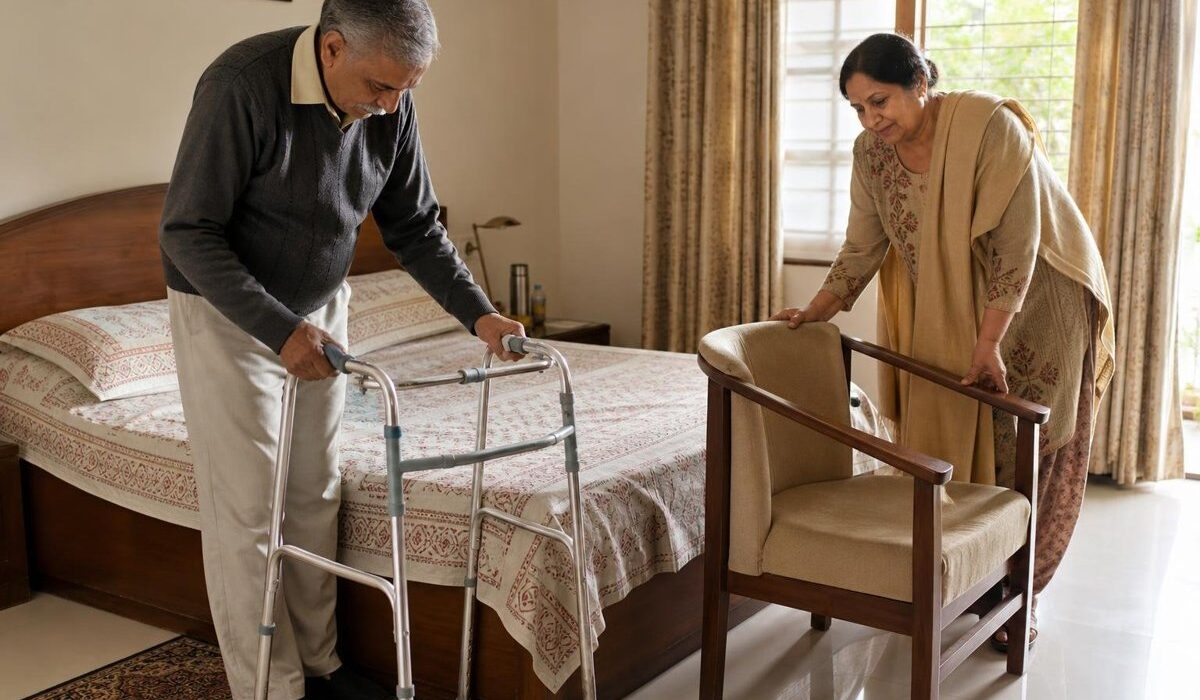
Practise walking with the walker before surgery. It feels clumsy the first time. Better to feel clumsy at home than in a hospital corridor.
If walking is very painful, stationary cycling or water exercises may be easier. Ask first.
How should you set up your home?
This is where most families in Mohali, Chandigarh and Panchkula need to think a bit.
Many homes have the bedroom upstairs. For the first few weeks, a bedroom on the ground floor is simpler, even if it means moving a bed into the drawing room for a while. Check the bathroom too. Indian style toilets are very hard after a hip replacement, so arrange a commode chair or a raised western seat. A grab bar near the toilet and a non-slip mat are cheap and worth it.
Other small changes:
- A firm chair with arms, not a low sofa you sink into.
- Night light between the bed and bathroom.
- Loose rugs and wires out of walking paths.
- Everyday things like phone, water, glasses and medicines at waist height.
That recliner your daughter suggested? Nice, but not essential. A sturdy chair with armrests does the job.
Families planning Hip Replacement Surgery in Mohali should also make these home arrangements before the hospital admission.
What should you eat before hip surgery?
Nothing exotic. Eat a normal balanced diet with enough protein. Dal, rajma, paneer, curd, eggs, fish or chicken if you eat them. You do not need to give up rice or roti. If you are overweight, gradual healthy weight loss can help, but crash diets right before surgery are not a good idea.
Follow fasting instructions exactly on the night before. Your anaesthetist will tell you when to stop food and water.
Who will help you after you come home?
Plan this before admission. Someone should be around for at least the first week or two, to help with meals, bathing and getting to follow up visits. If children are abroad and both of you are senior citizens, consider a trained attendant for a short period. Many families arrange one through the hospital or a local agency.
Also sort out practical bits: insurance pre-authorisation, leave from work, transport home in a car with a seat that is not too low. You may want to read what activities are allowed after hip replacement to plan ahead.
What should you pack for the hospital?
Loose comfortable clothes, slip-on footwear with a good grip, your walker if you already have one, all medical reports and medicines, a phone charger with a long cable, and a light shawl. Hospital rooms can feel cold in winter. That is plenty.
Frequently Asked Questions
How many weeks before surgery should I start preparing?
As early as possible once the date is fixed. Several weeks gives time to control sugar, treat infections and build some strength.
Should I stop my blood pressure tablets before surgery?
Do not stop any medicine on your own. Your surgeon and anaesthetist will tell you which ones to continue and which to pause.
Is it necessary to lose weight before hip replacement?
Not always. Healthy weight loss can help some patients, but your surgeon will advise based on your overall health.
Do I need a walker at home?
Most patients use a walker in the early weeks. Ask the physiotherapy team which type to buy or rent.
Can I prepare if I live outside Mohali?
Yes. Many patients do tests locally and bring reports. Your surgeon will confirm which tests are acceptable. More details are on our FAQs page.
If your hip replacement is coming up and you want to go over your preparation plan, schedule a visit with Dr. Zubin Mehta. For patients considering Hip Replacement Surgery in Chandigarh, a discussion with the surgeon can help clarify the preparation and recovery plan.